Gravel Driveway Maintenance
A gravel driveway asks for an hour or two of attention twice a year. Skip it and you are buying stone every eighteen months instead of every three years.
Grading — the one job that matters most
Traffic pushes stone from the centre of the driveway toward the edges. Left alone, the crown flattens, then inverts into a shallow channel, and then the driveway becomes a stream every time it rains.
Grading pulls that stone back and restores the crown. Twice a year is enough for most driveways.
- Small driveways: a landscape rake and an hour of work.
- Larger driveways: a drag harrow or box blade behind an ATV or tractor.
- Best conditions: a day or two after rain, when the surface is damp but not wet. Dry stone will not knit; saturated stone smears.
Aim for about 2% of crown — roughly 1.5 inches of rise from edge to centre across a 12 ft width.
Potholes — do it properly or do it again
A pothole forms where water sits, softens the base, and traffic pumps the fines out. Tipping loose stone into the hole treats the symptom, and it will be back within weeks.
- Square the hole out with a shovel — vertical sides, not a saucer. Loose sloping edges will not hold new material.
- Remove everything loose, including any standing water and mud.
- Fill with crusher run, not washed stone. You need the fines to bind.
- Compact in two-inch lifts — hand tamper is fine for a pothole.
- Overfill slightly and crown it, so it settles level rather than dishing again.
- Then fix the drainage that caused it. Otherwise you will be back.
Drainage
Almost every gravel driveway problem is a water problem wearing a different hat. Twice a year:
- Clear ditches of leaves, silt, and vegetation.
- Check culverts are open at both ends.
- Look for places where water runs along the driveway rather than off it.
- Confirm the crown still sheds water — pour a bucket out and watch where it goes.
Weeds
Weeds do not grow in clean stone. They grow in the organic matter — leaves, dust, clippings — that settles on top and breaks down into something seeds can root in.
- Prevention: geotextile fabric under the stone, installed at build time.
- Regular grading disturbs seedlings before they establish and mixes organic matter down.
- Blow leaves off in autumn rather than letting them break down in place.
- Spot treat what gets through. Blanket spraying a whole driveway is rarely necessary.
Dust
Driveways with a lot of fines throw dust in dry weather. Options, cheapest first: water it, apply calcium chloride or magnesium chloride (the standard rural treatment, applied a couple of times a season), or top with a washed stone like #57 that has no fines to throw.
Winter
- Raise the plow blade an inch, or fit skid shoes. A blade set to scrape will lift your surface stone onto the lawn.
- Mark the edges with driveway markers before the first snow so you know where the driveway ends.
- Avoid rock salt — it accelerates the breakdown of limestone and does little for a gravel surface anyway. Sand or fine grit gives better traction.
- Rake stone back off the verges in spring. This is when most surface stone is lost.
When to add fresh stone
Top up when you can see any of these:
- Base material showing through the surface course
- Ruts that reappear within days of grading
- Bare patches where stone has migrated away entirely
- Standing water after rain that used to drain
Most driveways need about 2 inches of fresh top stone every two to four years. For a 60 × 12 ft drive that is roughly 10 tons — about $350 to $600 delivered. Size yours with the driveway calculator set to resurface mode.
Annual schedule
| When | Job |
|---|---|
| Early spring | Rake stone back from verges, grade, fix winter potholes, clear ditches |
| Early summer | Dust control if needed, spot-treat weeds |
| Autumn | Grade and re-crown, blow off leaves, clear culverts before winter |
| Before first snow | Set driveway markers, check plow blade height |
| Every 2–4 years | Add 2 inches of fresh top stone |
Driveway maintenance tools
As an Amazon Associate I earn from qualifying purchases.

VEVOR Landscape Rake, 36" Head Aluminum Lake Weed Rake with 75" Long Handle for Loosening Soil, Lawn Care, Weeding Lake, Garden, Silver
$37.48
View on Amazon →
Trade Grade Pet-Friendly Ice Melt - Fast Acting Magnesium Chloride Formula, Safer for Pets & Surfaces, 15lb Bucket
$45.97
View on Amazon →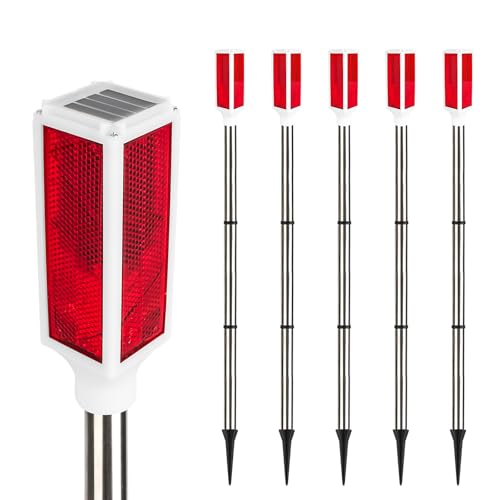
5 PCS Solar Driveway Markers, Solar Powered Reflective Road Stakes, Red
$27.99
View on Amazon →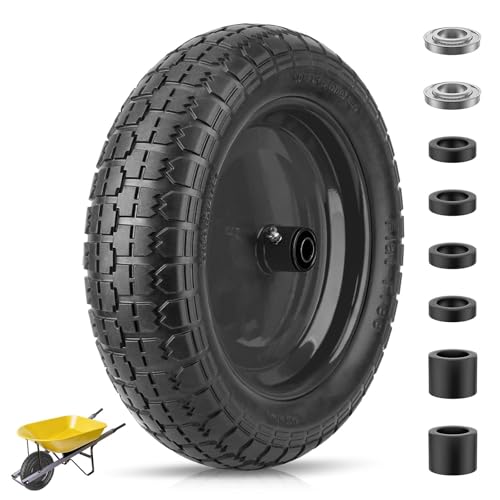
TICONN 4.80/4.00-8 Tire, 14.5" Flat Free Wheelbarrow Tire and Wheel
$34.95
View on Amazon →Prices as of Sep 25, 2026, 6:18 PM UTC. Product prices and availability are accurate as of the date/time indicated and are subject to change. Any price and availability information displayed on Amazon.com at the time of purchase will apply to the purchase of this product.
Frequently asked questions
How do you fix a pothole in a gravel driveway?
Square out the hole with a shovel, remove all loose material, fill with crusher run in two-inch lifts, and compact each lift. Simply tipping loose stone in makes the pothole return within weeks.
How often should you grade a gravel driveway?
Twice a year for most driveways — spring and autumn. Heavily used or steep driveways benefit from three or four times a year.
How do you stop weeds in a gravel driveway?
Geotextile fabric underneath is the real fix. For an existing driveway, regular grading disturbs seedlings, and spot treatment handles the rest. Weeds grow in the organic matter that collects on top, not in the stone.
How do you keep a gravel driveway from washing out?
Maintain the crown so water sheds sideways, keep ditches clear, and add cross-drains on slopes above 8 percent. Washouts are a drainage failure, not a stone failure.
Get your gravel estimate in 60 seconds
Free, no signup required.
Get the Gravel & Stone Calculator app for Android
Estimate gravel, stone, sand, and mulch on the job site, save projects, and share quantities with your supplier.
Building something else? Try our sister calculators
Smart Roofing Calculator
Free roof replacement cost estimates by material and pitch.
Smart Decking Calculator
Deck cost, boards, joists, and stair estimates.
Smart Fencing Calculator
Fence cost by material and linear footage.
Smart Tile Calculator
Tile quantity, grout, and thinset estimates.
Smart Insulation Calculator
R-value, batt count, and blown-in coverage.
Smart Decking Calculator
Android app — deck cost, boards, and framing on site.
Smart Drywall Calculator
Android app — drywall sheets, mud, and tape estimates.
Smart Sod Calculator
Android app — sod rolls, pallets, and coverage.
Smart Insulation Calculator
Android app — R-value and batt coverage.
Smart Tile Calculator
Android app — tile, grout, and thinset quantities.
Smart Fencing Calculator
Android app — fence cost estimates on the go.