Gravel Calculator
This is the calculator most people are looking for. Enter the length, width, and depth of the area you are covering, pick your stone, and you get the volume in cubic yards, the weight in tons, the number of bags if you are buying retail, and an estimated delivered price. Every other calculator on this site is a specialised version of this one.
What you'll need
As an Amazon Associate I earn from qualifying purchases.
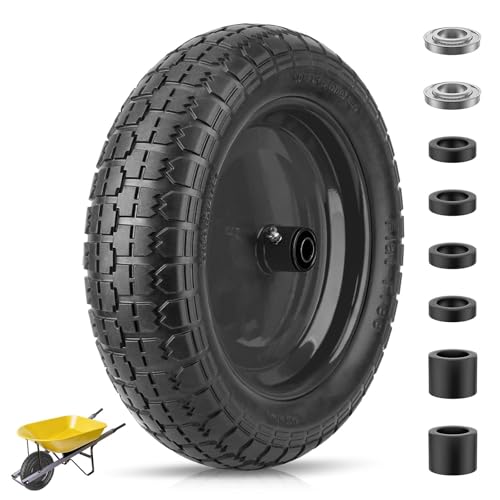
TICONN 4.80/4.00-8 Tire, 14.5" Flat Free Wheelbarrow Tire and Wheel
$34.95
View on Amazon →
VEVOR Landscape Rake, 36" Head Aluminum Lake Weed Rake with 75" Long Handle for Loosening Soil, Lawn Care, Weeding Lake, Garden, Silver
$37.48
View on Amazon →
Orange Mason Line String Line - #18 Braided Nylon String - 250 Ft Length - Nylon Twine for Gardening Or Masonry Tools - Perfect Construction String for A String Level, Twine String for Gardening
$7.99
View on Amazon →
HongWay 500 Pack 6 Inch Landscape Staples, Garden Staples Pins Galvanized 11 Gauge Ground Stakes Yard Lawn Staples for Turf Landscaping Fabric Fence Tent Irrigation Tube Outdoor Decorations
$37.99
View on Amazon →Prices as of Sep 25, 2026, 6:18 PM UTC. Product prices and availability are accurate as of the date/time indicated and are subject to change. Any price and availability information displayed on Amazon.com at the time of purchase will apply to the purchase of this product.
How much gravel do you actually need?
The calculation itself is simple arithmetic, but three things trip people up often enough that they are worth spelling out. The first is unit mixing: your area is in square feet and your depth is in inches, so the depth has to be converted to feet before anything is multiplied. Skipping that conversion produces an answer twelve times too large, and it is by far the most common error in manual gravel calculations.
The second is the difference between volume and weight. Suppliers sell gravel by the ton, but every plan and every calculator works in cubic yards. Converting between them requires the density of the specific stone you are buying — and densities vary from about 1.35 tons per cubic yard for rounded pea gravel up to 1.5 for crusher run. Using a single generic figure can put you out by 10% on a large order, which is most of a truck load.
The third is compaction. Gravel settles. Angular stone locks together and loses volume as it is compacted, and some material always works down into the subgrade on the first pass. Ordering the exact finished volume reliably leaves you short. A 10% allowance is standard practice, and 15% is sensible over soft or wet ground.
Choosing the right depth
Depth is the variable that most affects your total, and it is set by load rather than appearance. A decorative bed nobody walks on needs two inches. A patio surface needs two inches over a compacted base. A new driveway needs eight to twelve inches built in layers. Doubling the depth doubles the cost, so this is the number worth getting right before you order rather than after.
If you are unsure, the gravel depth calculator picks the depth from your application, and will also tell you how far the stone you already have will actually spread.
Bulk or bagged?
A cubic yard is 27 cubic feet, which is 54 standard half-cubic-foot bags. At typical retail prices that is well over $300 per cubic yard against roughly $45 to $95 delivered in bulk. Bags only make sense below about half a cubic yard, where a flat delivery fee would dominate the bill. The bagged gravel calculator finds the crossover point for your specific job.
Ordering
Delivery is charged per truck load, not per ton, so the size of your order matters more than most people expect. Ordering thirteen tons when a tandem dump carries twelve means paying two full haul fees. Round your order to fill loads where you can, and check it against the delivery calculator before you call the quarry.
Round the final figure up to whatever increment your supplier sells in — usually half a ton or a full yard. Running short mid-job costs another delivery fee, which is almost always more than the extra material would have cost.
Get the Gravel & Stone Calculator app for Android
Estimate gravel, stone, sand, and mulch on the job site, save projects, and share quantities with your supplier.
Building something else? Try our sister calculators
Smart Roofing Calculator
Free roof replacement cost estimates by material and pitch.
Smart Decking Calculator
Deck cost, boards, joists, and stair estimates.
Smart Fencing Calculator
Fence cost by material and linear footage.
Smart Tile Calculator
Tile quantity, grout, and thinset estimates.
Smart Insulation Calculator
R-value, batt count, and blown-in coverage.
Smart Decking Calculator
Android app — deck cost, boards, and framing on site.
Smart Drywall Calculator
Android app — drywall sheets, mud, and tape estimates.
Smart Sod Calculator
Android app — sod rolls, pallets, and coverage.
Smart Insulation Calculator
Android app — R-value and batt coverage.
Smart Tile Calculator
Android app — tile, grout, and thinset quantities.
Smart Fencing Calculator
Android app — fence cost estimates on the go.
Frequently asked questions
- How much gravel do I need for a 20x12 area?
- At a standard 4-inch depth, a 20 ft × 12 ft area needs about 2.96 cubic yards of gravel before waste, or roughly 3.3 cubic yards with a 10% allowance — about 4.9 tons of crusher run.
- How many cubic yards are in a ton of gravel?
- It depends on the stone. Crusher run runs about 1.5 tons per cubic yard, #57 stone about 1.4, and rounded pea gravel about 1.35. So one ton is roughly 0.67 to 0.74 cubic yards.
- Should I order extra gravel?
- Yes. Gravel compacts as it is driven on and settles into the subgrade. A 10% allowance is standard, and 15% is sensible over soft or wet ground.
- Is it cheaper to buy gravel in bags or in bulk?
- Bulk is dramatically cheaper above about half a cubic yard. Bagged stone can cost four to six times as much per cubic yard once you account for the volume in a 50 lb bag.
Related calculators
All calculators →
Cubic Yards to Tons Calculator
Convert between cubic yards and tons for any gravel type, using real in-place densities.
Open calculator →
Gravel Coverage Calculator
See how much area one ton or one cubic yard of gravel will actually cover at your chosen depth.
Open calculator →
Bagged Gravel Calculator
How many bags of gravel you need, and whether bulk delivery would be cheaper.
Open calculator →