Paver Calculator
Enter the patio size, the paver and the laying pattern. This paver calculator counts pavers from the paver face plus its joint, adds the right cutting allowance for the pattern, handles a soldier-course border, and sizes the crushed-stone base, bedding sand and polymeric sand that go with it.
What you'll need
As an Amazon Associate I earn from qualifying purchases.

VEVOR Plate Compactor, 6.5 HP 196cc Gas Engine, 2360 lbs Compaction Force
$432.50
Check price on Amazon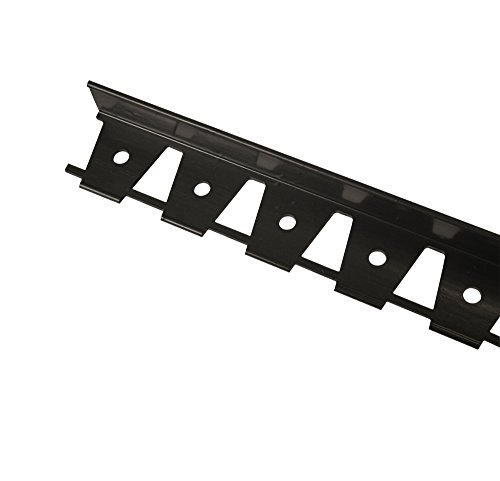
EasyFlex Snip-to-Flex Paver Edging, 60-Feet, Black
$89.99
Check price on Amazon
OX Concrete Screed Board, 8 Ft Aluminum Screed with Level Vial & Handle
$147.99
Check price on Amazon
10 Pound Camel Brown DOMINATOR Polymeric Sand with Revolutionary Ceramic Flex Technology for Stabilizing Paver Joints/Gaps, 1/8” up to 4”, Professional Grade Results
$39.00
Check price on AmazonPrices as of Sep 28, 2026, 4:34 PM UTC. Product prices and availability are accurate as of the date/time indicated and are subject to change. Any price and availability information displayed on Amazon.com at the time of purchase will apply to the purchase of this product.
How the paver count works
Every paver occupies its own face plus half of the joint on each side, so the space one paver takes up is (length + joint) × (width + joint). Divide 144 square inches by that and you have pavers per square foot. A 4×8 brick paver with no joint would be exactly 4.5 per square foot; with the usual 1/8 inch joint it is about 4.3. That small difference is 4–5% of the order — roughly the whole waste allowance — which is why calculators that ignore the joint leave people either short or with an extra pallet.
The pattern sets the waste. Running bond, stack bond and basketweave only need cuts along the edges, so 5% covers them. A 90° herringbone needs a cut at every other edge paver (10%); a 45° herringbone is cut along every edge (15%). Curves and circles also run at about 15%.
Borders
A soldier course — 4×8 pavers standing on their long side around the edge — frames the patio and stops the field from creeping. It also changes the count: the border takes an 8 inch strip off every side, so the field is smaller and needs fewer pavers, while the border needs one paver for every 4 inches of perimeter. The calculator does both.
What goes underneath
| Use | Compacted base | Bedding sand |
|---|---|---|
| Patio, walkway | 4 in crusher run | 1 in concrete sand |
| Patio on clay or in deep frost | 6 in | 1 in |
| Driveway, cars | 8 in | 1 in |
| Driveway on poor soil | 10–12 in | 1 in |
The base should extend about 6 inches past the paver edge on every side so the edge restraint has something solid to sit on, and it loses about a fifth of its loose volume when it is compacted in 2–3 inch lifts — both are built into the tonnage above. Bedding sand is screeded to an even inch; it is not a leveling layer, so fix low spots in the gravel, not the sand.
Worked example
A 16 × 12 ft patio in 4×8 pavers with 1/8 inch joints, running bond, no border: 192 sq ft × 4.30 per sq ft × 1.05 = 867 pavers, 2–3 pallets depending on the pallet size, 4.9 tons of crusher run for a 4 inch base and just under a ton of bedding sand.
For the base on its own, the paver base calculator handles overhang and traffic, the paver sand calculator sizes the bedding layer, and the polymeric sand calculator works out joint sand from your real joint width. To price the whole job, use the paver patio cost calculator.
Get the Gravel & Stone Calculator app for Android
Estimate gravel, stone, sand, and mulch on the job site, save projects, and share quantities with your supplier.
Building something else? Try our sister calculators
Smart Roofing Calculator
Free roof replacement cost estimates by material and pitch.
Smart Decking Calculator
Deck cost, boards, joists, and stair estimates.
Smart Fencing Calculator
Fence cost by material and linear footage.
Smart Tile Calculator
Tile quantity, grout, and thinset estimates.
Smart Insulation Calculator
R-value, batt count, and blown-in coverage.
Smart Decking Calculator
Android app — deck cost, boards, and framing on site.
Smart Drywall Calculator
Android app — drywall sheets, mud, and tape estimates.
Smart Sod Calculator
Android app — sod rolls, pallets, and coverage.
Smart Insulation Calculator
Android app — R-value and batt coverage.
Smart Tile Calculator
Android app — tile, grout, and thinset quantities.
Smart Fencing Calculator
Android app — fence cost estimates on the go.
Frequently asked questions
- How many pavers do I need for a 12 x 12 patio?
- 144 sq ft of 4x8 pavers with 1/8 inch joints is about 4.3 pavers per square foot, so roughly 620 pavers before waste, or about 650 with 5% for a running bond. Herringbone at 45 degrees needs about 710.
- How many 4x8 pavers are in a square foot?
- 4.5 with no joint (144 ÷ 32). With a typical 1/8 inch joint it drops to about 4.3, which is the number to buy by.
- How much extra paver should I buy?
- 5% for running bond, stack bond and basketweave, 10% for 90° herringbone, and 15% for 45° herringbone or anything with curves. Keep a few spares from the same run for future repairs.
- How much gravel goes under pavers?
- 4 inches of compacted crusher run for a patio or walkway, 6 inches on clay or where frost is deep, and 8–12 inches under a driveway — plus 1 inch of bedding sand. The base should extend 6 inches past the paver edge.
Related calculators
All calculators →
Pea Gravel Calculator
Pea gravel quantity and cost for patios, play areas, dog runs, and garden beds.
Open calculator →
River Rock Calculator
River rock quantity and cost for beds, dry creek features, and decorative borders.
Open calculator →
Decomposed Granite Calculator
Decomposed granite quantity for paths, patios, and xeriscape areas, with or without stabilizer.
Open calculator →