Best Paver Base: Crushed Gravel, Panels or Sand?
What goes under pavers, how deep for a patio or a driveway, and how much to order — worked out with our paver base calculator.
Updated · by the Smart Gravel Calculator team
As an Amazon Associate I earn from qualifying purchases. This guide is written from product specifications, building-code requirements and our calculators — it is not a hands-on product test. Affiliate disclosure
A paver surface is only as good as the layers under it: a compacted crushed-stone base carries the load, a thin bed of sand lets you set each paver level, and an edge restraint stops the whole thing spreading. Foam paver base panels or permeable plastic grids can replace some of the gravel on light-duty patios and pads.
This guide compares the options and sizes the base with the same function as our paver base calculator.
Compared by type
Pros and cons describe each type from its specifications. The product in each row is a current, well-rated option of that type on Amazon, refreshed twice a day — check the listing's specifications against the “check” line before you buy.
Crushed-stone base (bagged or bulk)
Best for: Every patio, walk and driveway — the structural layer
 Quarter Down Crushed Limestone Gravel – Compactable Gravel for Paver Base, Walkways, Patios & Small DIY Projects – Gray Crushed Stone with Fines (40 lbs)$61.99Check price on Amazon
Check: Angular crushed stone with fines (e.g. 3/4 in minus), not round pea gravel
- Compacts into a stiff, load-bearing layer
- Drains better than soil
- Bulk delivery is cheapest for large jobs
- Heavy — a patio can need several tons
- Must be compacted in lifts
- Bags are costly for large areas
Plastic base grid (permeable panels)
Best for: Gravel-filled patios, paths and pads where you want less digging
 40FT Gravel Grid for Driveway –HDPE Geocell Ground Stabilizer$49.99Check price on Amazon
Check: Load rating and whether it is meant to be filled with gravel or set under pavers
- Locks the surface stone so it does not rut or migrate
- Spreads load, so the base can be thinner on firm soil
- Permeable — no run-off
- Still needs a compacted base on soft soil
- Not a substitute for full-depth base under a driveway of pavers
- Costs more per square foot than gravel alone
Bedding (leveling) sand
Best for: The 1 in screeded layer the pavers sit in
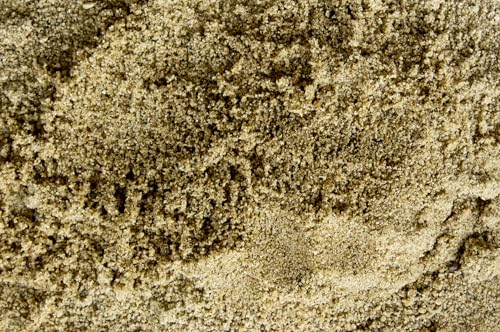 Fine Masonry Sand – Gravel Company Washed Sand for Paver Joints, Patios, Stepping Stones, Leveling & Mortar (40 lbs)$62.99Check price on Amazon
Check: Coarse, washed concrete sand — not fine play sand or stone dust in wet areas
- Lets you set pavers level
- Vibrates up into the joints
- Cheap
- Ruts if laid thicker than about 1–1.5 in
- Washes out without edge restraint
- Needs to be screeded flat
Edge restraint
Best for: Holding pavers in place along every open edge
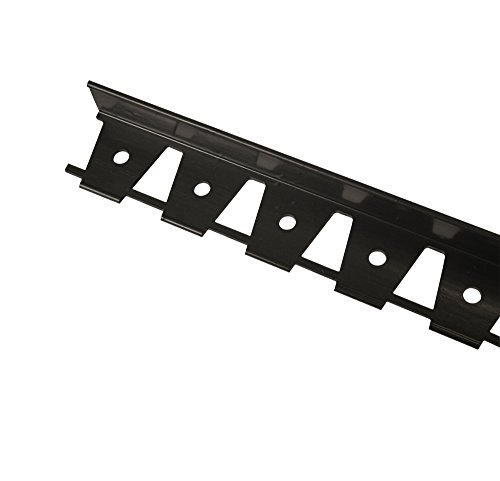 EasyFlex Snip-to-Flex Paver Edging, 60-Feet, Black$89.99Check price on Amazon
Check: Flexible sections for curves and spike length
- Stops pavers and sand creeping outwards
- Hidden below the surface
- Bends to follow curves
- Needs to sit on the base, not the sand
- Spikes can bend in rocky base
- Extra cost on long edges
Screed rails and tools
Best for: Getting the sand bed flat and even
 OX Concrete Screed Board, 8 Ft Aluminum Screed with Level Vial & Handle$147.99Check price on Amazon
Check: Rail length and whether rails are 1 in tall
- Guarantees an even 1 in sand layer
- Speeds up large patios
- Reusable
- One more thing to buy
- Leaves channels to fill as you go
- Straight lumber can do the same job
| Type | Current option | Pros | Cons |
|---|---|---|---|
| Crushed-stone base (bagged or bulk)Best for: Every patio, walk and driveway — the structural layerCheck: Angular crushed stone with fines (e.g. 3/4 in minus), not round pea gravel | Quarter Down Crushed Limestone Gravel – Compactable Gravel for Paver Base, Walkways, Patios & Small DIY Projects – Gray Crushed Stone with Fines (40 lbs)$61.99Check price on Amazon |
|
|
| Plastic base grid (permeable panels)Best for: Gravel-filled patios, paths and pads where you want less diggingCheck: Load rating and whether it is meant to be filled with gravel or set under pavers | 40FT Gravel Grid for Driveway –HDPE Geocell Ground Stabilizer$49.99Check price on Amazon |
|
|
| Bedding (leveling) sandBest for: The 1 in screeded layer the pavers sit inCheck: Coarse, washed concrete sand — not fine play sand or stone dust in wet areas | Fine Masonry Sand – Gravel Company Washed Sand for Paver Joints, Patios, Stepping Stones, Leveling & Mortar (40 lbs)$62.99Check price on Amazon |
|
|
| Edge restraintBest for: Holding pavers in place along every open edgeCheck: Flexible sections for curves and spike length | EasyFlex Snip-to-Flex Paver Edging, 60-Feet, Black$89.99Check price on Amazon |
|
|
| Screed rails and toolsBest for: Getting the sand bed flat and evenCheck: Rail length and whether rails are 1 in tall | OX Concrete Screed Board, 8 Ft Aluminum Screed with Level Vial & Handle$147.99Check price on Amazon |
|
|
Prices as of Sep 28, 2026, 4:34 PM UTC. Product prices and availability are accurate as of the date/time indicated and are subject to change. Any price and availability information displayed on Amazon.com at the time of purchase will apply to the purchase of this product.
How much base and sand you need
Base depth follows the traffic: about 4 in for walks, 5–6 in for patios and 8–12 in for driveways, compacted, and extending about 6 in beyond the pavers. The paver base calculator sizes it; the examples use the same function.
Worked example: A 16 × 12 ft paver area
- As a patio: 3.75 yd³ of base (5.63 tons) and 0.65 yd³ of bedding sand
- In 50 lb bags, the patio base is about 226 bags
- As a driveway pad: 7.5 yd³ of base (11.25 tons)
Patio: 5.63 tons of base — at 226 bags, bulk delivery is usually far easier. A driveway doubles the base.
Then count joint sand with the polymeric sand calculator and bedding sand with the paver sand calculator.
Choosing the base
| Project | Usual base | Notes |
|---|---|---|
| Walkway | 4 in crushed stone, or base panels | Panels save digging on small jobs |
| Patio | 5–6 in crushed stone | Compact in 2–3 in lifts |
| Driveway | 8–12 in crushed stone over woven fabric | No panels unless rated for vehicles |
| Wet or clay soil | Deeper base plus geotextile | See the landscape fabric guide |
Pea gravel does not lock together and makes a poor paver base — see pea gravel vs crushed stone.
What to look for when buying
- Angular, crushed stone with fines so it compacts (often sold as paver base, road base or crusher run).
- Bag weight and coverage — compare with bulk tonnage from a local yard.
- Coarse washed sand for the bedding layer.
- Edge restraint length to match the patio perimeter.
- For panels: the traffic rating and the maker's required base preparation.
Shop the types above
As an Amazon Associate I earn from qualifying purchases.
Quarter Down Crushed Limestone Gravel – Compactable Gravel for Paver Base, Walkways, Patios & Small DIY Projects – Gray Crushed Stone with Fines (40 lbs)
$61.99
Check price on Amazon40FT Gravel Grid for Driveway –HDPE Geocell Ground Stabilizer
$49.99
Check price on AmazonFine Masonry Sand – Gravel Company Washed Sand for Paver Joints, Patios, Stepping Stones, Leveling & Mortar (40 lbs)
$62.99
Check price on AmazonEasyFlex Snip-to-Flex Paver Edging, 60-Feet, Black
$89.99
Check price on AmazonOX Concrete Screed Board, 8 Ft Aluminum Screed with Level Vial & Handle
$147.99
Check price on Amazon
1.5 Inch Crushed Limestone Gravel – Gravel Company Angular Stone for Driveways, Drainage, Landscaping, Base Material & Erosion Control (40 lbs)
$62.99
Check price on AmazonPrices as of Sep 28, 2026, 4:34 PM UTC. Product prices and availability are accurate as of the date/time indicated and are subject to change. Any price and availability information displayed on Amazon.com at the time of purchase will apply to the purchase of this product.
Safety notes
- Call 811 (in the US) before excavating.
- Lift bags with your legs and use a wheelbarrow or cart — a patio base can mean tons of material.
- Wear a dust mask when cutting pavers or handling dry fines, and hearing protection with a plate compactor.
Frequently asked questions
What is the best base for pavers?
Compacted, angular crushed stone with fines — often sold as paver base, road base or crusher run — topped with about 1 inch of coarse bedding sand.
How deep should paver base be?
About 4 inches for walks, 5 to 6 inches for patios and 8 to 12 inches for driveways, compacted, and deeper on clay or wet soil.
Are paver base panels as good as gravel?
For small, foot-traffic patios on a well-prepared subgrade they work well and save digging. For driveways and poor soil, a compacted crushed-stone base is the standard.
Can I use sand as a paver base?
Sand is only the thin bedding layer. On its own it shifts and ruts; the load-bearing base should be compacted crushed stone.
How many bags of paver base do I need?
Work out the base volume or tonnage for your area and depth, then divide by the bag size. Our paver base calculator gives the tonnage.
Get your gravel estimate in 60 seconds
Free, no signup required.